As an Amazon Associate, we earn from qualifying purchases. Some links on this site are affiliate links at no extra cost to you. Our recommendations are based on thorough research and editorial judgment.

How Hair Dryers Have Evolved Over the Years

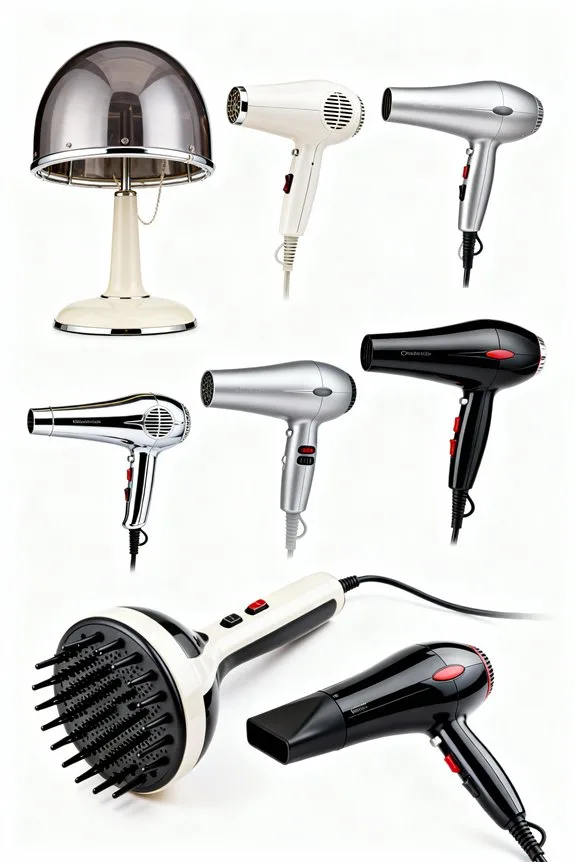
Hair dryers have evolved from bulky 10-pound models in 1888 that emitted 90-decibel noise, to sleek, handheld designs under one pound featuring ceramic heating elements reaching 600°F for consistent heat, ionic technology emitting negative ions to reduce frizz and enhance shine, multi-level heat settings tailored for all hair types, and powerful cordless motors providing over 60 minutes of styling freedom—delivering ultimate performance and precision styling with lightweight, ergonomic convenience. Discover the advancements driving these show-stopping tools.
Key Takeaways
- The first hair dryer, invented in 1888, was bulky, noisy, and based on vacuum cleaner technology, revolutionizing hair drying with warm air emission.
- The 1920s introduced portable electric handheld dryers, significantly reducing drying times from over 30 minutes to about 15 minutes.
- Hooded hair dryers emerged in the 1930s for salons, offering even heat distribution and improving moisture retention during drying.
- Modern dryers use ceramic heating, ionic technology, and ergonomic designs to reduce drying time, minimize frizz, and enhance styling precision.
- Advances include lightweight, cordless, and rechargeable models with customizable heat settings and attachments for versatile hair care and styling convenience.
The Origins of Hair Drying Technology
You may be interested
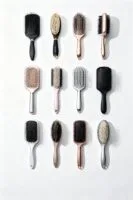

Revolutionizing hair care since 1888, Alexandre Ferdinand Godefroy’s invention of the first hair dryer harnessed vacuum cleaner technology to emit warm air through a large, tube-like apparatus delivering controlled heat, which, despite its bulky 10-pound frame, 1.5-foot length, and high noise output near 90 decibels, laid the groundwork for future styling innovations by offering the ultimate hands-free drying concept. This pioneering device sparked the evolution of hair dryers, transforming hair drying from passive air drying to a more precise, efficient process. Over decades, technological advancements evolved the bulky original into more practical handheld hair dryers by the 1960s, drastically improving portability and user control. This shift marked a key milestone in the hair drying arena, making powerful, lightweight, and user-friendly designs accessible beyond salons to everyday consumers seeking show-stopping convenience. Modern hair dryers now incorporate advanced ceramic and ionic technologies to reduce frizz and protect hair health while enhancing drying efficiency.
The Development of Early Hair Dryer Models
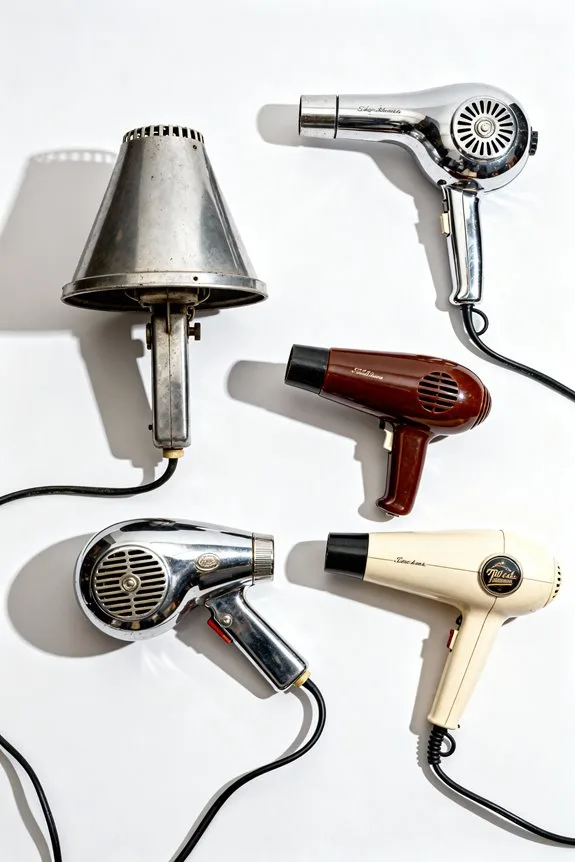
Although initially constrained by cumbersome weight and noise levels—27 pounds and nearly 90 decibels respectively—the earliest hair dryer prototypes rapidly progressed from Godefroy’s 1888 vacuum-based tube to Alexander F. Cavendish’s 1890 electric hair model, which laid the groundwork for modern innovation despite its impractical heft. Early electric hair dryers struggled with inefficient heat distribution and cumbersome designs, yet their introduction marked a pivotal reduction in drying time compared to traditional air drying. By the 1920s, improvements yielded lighter units capable of handheld blow, offering unprecedented convenience. These advancements ultimately culminated in the first handheld hair dryer, merging portability and performance to revolutionize personal grooming, while enhancing user control and safety. Such developments established the ultimate foundation for future breakthroughs in reducing drying time and optimizing heat distribution. Modern technology emphasizes energy efficiency to enhance performance while minimizing electricity consumption.
Transition to Handheld Hair Dryers
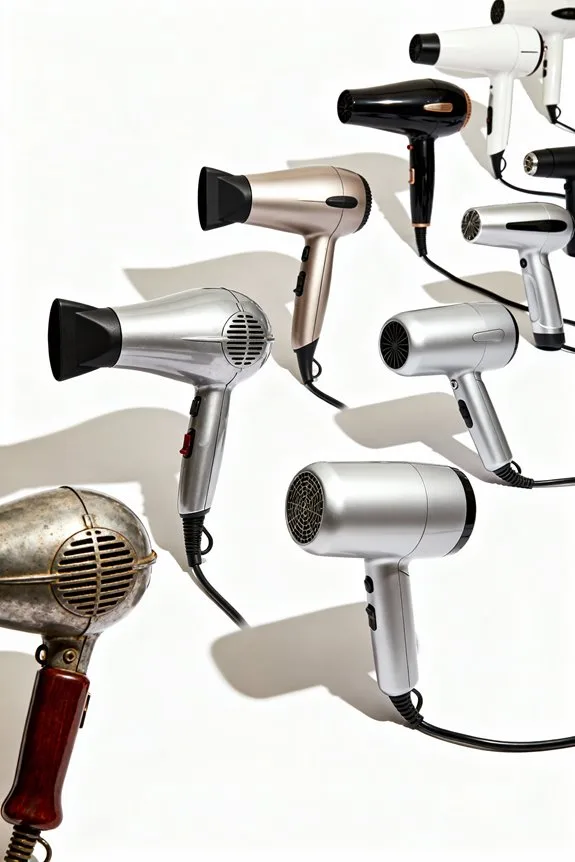
As the demand for convenient personal grooming soared, the first portable electric hair dryer arrived around 1920—marking a monumental change from cumbersome salon instruments to manageable devices designed for easy handling and faster drying times, typically around 15 minutes compared to upwards of 30 with previous models; these early units, though weighing over two pounds, combined electric heating elements and airflow technology into a compact form that empowered users to reduce salon dependency while laying the groundwork for innovations in lightweight design, adjustable heat settings, and ergonomic control that would evolve into the ultimate handheld hair dryers of the 1960s and beyond. This change introduced handheld models tailored for diverse styling needs—featuring variable heat settings, enhanced airflow efficiency, and balanced weight distribution—making drying not only faster and safer but also perfectly customizable for every hair type, finally achieving at-home precision styling with show-stopping results. Modern advancements even include intelligent temperature control systems that adjust air temperature frequently to prevent heat damage and ensure hair health during drying.
Recommended Products

【Amazing Force】Compared to handheld hair dryers our dryer reduces time by over 70%, saving your precious time, especially when grooming large dogs.

【Amazing Force】Compared to handheld hair dryers our dryer reduces time by over 70%, saving your precious time, especially when grooming large dogs.
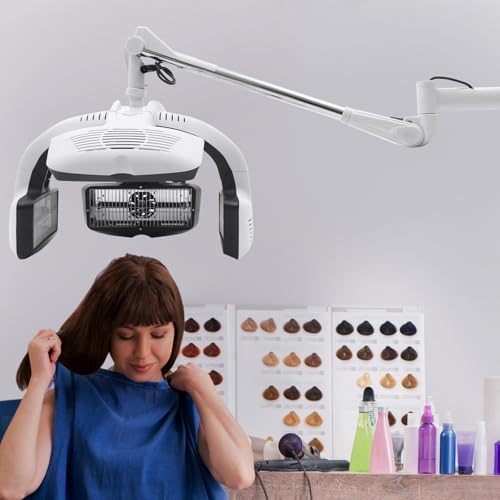
Strong & Durable Construction: Made from premium iron and ABS materials using injection molding technology, this device is highly wear-resistant, corrosion-resistant, anti-static, and deformation-resistant. It ensures long-term reliability and performance in professional salon environments.
The Rise of Hooded Hair Dryers in Salons
Three decades after the advent of handheld hair dryers, the 1930s introduced the ultimate salon innovation: the hooded hair dryer, engineered with a spacious, heat-retentive dome that enclosed the entire head to guarantee even airflow distribution and consistent temperature control ranging from 120 to 150 degrees Fahrenheit, delivering faster drying times with reduced heat damage compared to handheld counterparts; this ergonomic design, weighing approximately 10 to 15 pounds but mounted on adjustable stands for effortless positioning, allowed clients to fully relax without the burden of holding equipment, while providing stylists with a reliable tool ideal for a spectrum of hair treatments—from setting curls with moisture retention up to 40% greater than open-air drying to accelerating conditioning agent absorption—making hooded dryers a show-stopping presence that transformed salon efficiency and elevated professional hairstyling to accessible luxury. Embraced widely for salon use, their convenience and contribution to improved hair care marked a significant leap in accessibility, shaping modern salon culture. Modern developments in ionic and ceramic technology further reduce frizz and heat damage, enhancing the effectiveness of both handheld and hooded dryers in professional settings.
Recommended Products

𝐓𝐑𝐔𝐒𝐓𝐄𝐃 𝐁𝐘 𝐒𝐀𝐋𝐎𝐍 𝐏𝐑𝐎𝐅𝐄𝐒𝐒𝐈𝐎𝐍𝐀𝐋𝐒: This dryer combines premium product quality with a robust design tailored for high-volume salons. It was developed and tested in professional salons for licensed experts who demand excellence.

Flexible Control: The hood dryer has 2 convenient knob switches with timing function (0-60 minutes) and adjustable temperature (3 heat settings), allowing you to accurately set the time and temperature according to different hairstyles that you need.

𝐓𝐑𝐔𝐒𝐓𝐄𝐃 𝐁𝐘 𝐒𝐀𝐋𝐎𝐍 𝐏𝐑𝐎𝐅𝐄𝐒𝐒𝐈𝐎𝐍𝐀𝐋𝐒: This dryer combines premium product quality with a robust design tailored for high-volume salons. It was developed and tested in professional salons for licensed experts who demand excellence.
Innovations in Hair Dryer Materials and Design
What makes modern hair dryers truly stand out is their innovative use of advanced materials and ergonomic designs, combining ceramic heating elements that distribute consistent temperatures around 450°F to 600°F without hotspots—thereby reducing heat damage—with ionic technology that emits millions of negative ions per cubic centimeter to cut drying time by up to 30% while smoothing cuticles for frizz reduction. Tourmaline-infused components deliver far-infrared heat that seals moisture retention, enhancing hair shine and health. Ergonomic designs reduce hand fatigue during prolonged use by optimizing balance and grip, making styling effortless. Additionally, versatile attachments such as diffusers and concentrators elevate functionality, allowing users to achieve a range of show-stopping looks tailored precisely to their hair type and styling needs, demonstrating the ultimate blend of technology and user comfort in contemporary hair dryers. Many models also incorporate multiple heat settings to customize the drying experience and protect different hair types.
The Emergence of Ionic and Ceramic Technologies
Although initially developed separately, the ultimate fusion of ionic and ceramic technologies revolutionized hair drying by combining millions of negative ions per cubic centimeter—which break down water molecules to speed drying by up to 30% and reduce frizz—with ceramic heating elements that maintain consistent temperatures between 450°F and 600°F, eliminating hotspots and minimizing heat damage, thereby delivering a faster, smoother, and visibly shinier finish that caters effectively to fine, thick, and textured hair types alike. Ionic hair dryers featuring ceramic technology now offer precise heat and speed settings, allowing users to personalize the drying experience according to their hair types and styling needs. This blend achieves impressive faster drying while preserving hair health, making ionic and ceramic hair dryers the ultimate must-have for those seeking show-stopping, damage-free results. The sleek design and efficient heat distribution complement modern styling tools, enhancing both functionality and user experience.
Recommended Products
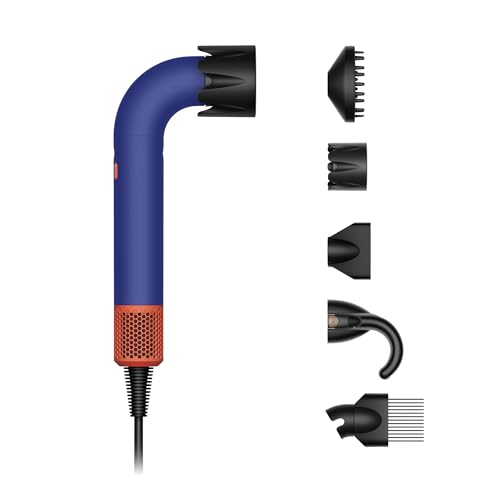
Our most powerful, yet lightest⁰ hair dryer.

Fast-Drying Blow Dryer: The AirLight Pro hair dryer is augmented Infrared light technology for fast drying and hydration without damage

Fast drying. The small, powerful Dyson digital motor V9 combined with Air Multiplier technology produces a high-pressure, high-velocity jet of controlled air for fast drying and precision styling.
Portable and Cordless Hair Dryers: Convenience on the Go
Building upon the cutting-edge fusion of ionic and ceramic technologies that deliver faster drying times by up to 30% while preserving hair integrity with consistent heat control between 450°F and 600°F, the evolution of hair dryers now embraces unparalleled portability and cordless freedom, offering travel-friendly devices typically weighing under one pound and featuring rechargeable batteries that eliminate cord restrictions—these sleek, foldable designs marry convenience with advanced functionalities such as multi-level heat settings and ionic emission, ensuring show-stopping results wherever styling takes place. Modern portable hair dryers harness cutting-edge technology to provide lightweight, compact forms ideal for travel or tight storage, while cordless models release ultimate styling convenience by eradicating tangled cords, proving that true innovation lies in combining style performance with effortless mobility. Additionally, many of these devices include battery life capabilities exceeding 60 minutes to support extended styling sessions without interruption.
Recommended Products

[ATTENTION] Before placing an order, please read the attention notice displayed below.

A network of Nural sensors within the machine activate intelligent features automatically to optimize your styling routine.

A new compact design that combines hair care effect and nano care history (*1) maximum air volume of 4.6 sq ft (1.6 m3/min)
Modern Features Shaping Today’s Hair Dryers
Modern hair dryers showcase the ultimate in styling innovation by integrating ionic technology that emits negative ions to reduce drying time by up to 30% while minimizing frizz and enhancing shine, combined with ceramic components that deliver consistent heat distribution between 450°F and 600°F to prevent damaging hotspots, all wrapped in lightweight, ergonomic designs featuring adjustable heat and speed settings tailored for individual hair types, plus smart digital controls that offer precise temperature regulation—these advanced features elevate both performance and user comfort, ensuring every styling session ends with show-stopping results. Additionally, the inclusion of a cool shot button locks in styles by rapidly lowering heat, making modern hair dryers adaptable for different hair types, guaranteeing smooth, vibrant finishes with optimized heat use and superior control precision. Models like the Conair Pro Style feature a powerful 1875W motor providing fast drying and support for jumbo rollers, enhancing overall styling versatility.
Recommended Products

Lightning Fast Drying - Say goodbye to traditional hair dryers and long drying sessions; Our RevAir Reverse-Air Hair Dryer is designed to dry your hair in half the time using innovative technology that helps you save the time and effort spent drying and taming

FASTEST DRYING: The ghd Speed delivers ultra-fast drying performance, cutting down styling time significantly with powerful airflow technology.

LUXURY GIFT SET: Premium ghd Chronos flat iron and Helios hair dryer in elegant cherry red, presented in a luxurious travel-inspired vanity case worth $100.
Frequently Asked Questions
How Has the Hair Dryer Changed Over Time?
Initially bulky and noisy, hair dryers have transformed into lightweight, portable models featuring motor improvements, energy efficiency, ionic technology, and styling attachments. This evolution enhances user convenience, hair health, and versatility in modern hair care routines.
What Did the First Ever Hair Dryer Look Like?
The first ever hair dryer featured a vintage design resembling a large handheld vacuum, utilizing early technology with manual operation. It lacked modern safety features and was considered a luxury item, cumbersome and impractical for everyday personal use.
How Did People Dry Their Hair 100 Years Ago?
Primarily, people practiced natural drying, employing towel methods to trap moisture. They also trusted air drying by opening windows or stepping outside for sun exposure. Occasionally, they positioned near fireplace warmth, embracing gentle, traditional techniques for hair care.
What Is the Transformation of a Hair Dryer?
The transformation of a hair dryer reflects innovative designs, enhanced energy efficiency, and material advancements, promoting user convenience. Increased brand competition drives continuous improvements, resulting in lightweight, multifunctional devices offering superior performance and styling versatility.