As an Amazon Associate, we earn from qualifying purchases. Some links on this site are affiliate links at no extra cost to you. Our recommendations are based on thorough research and editorial judgment.

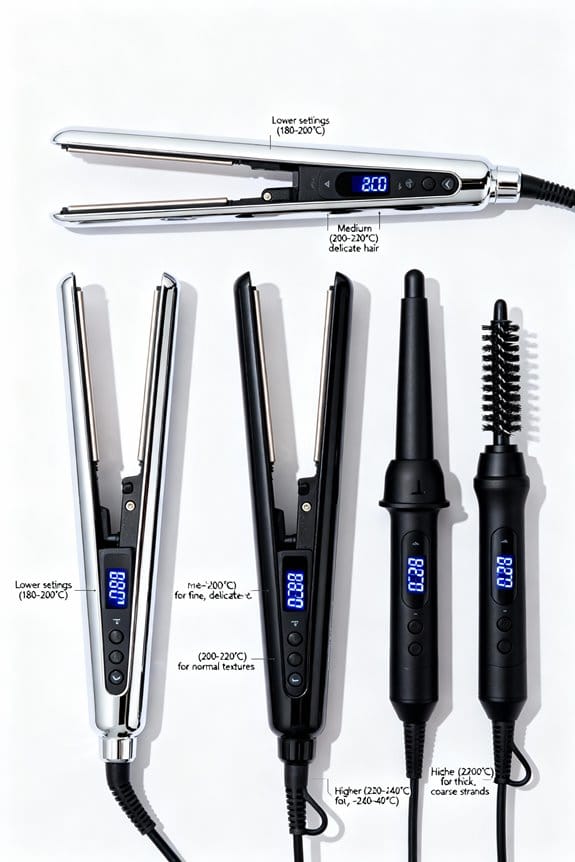
Recommended Temperature Ranges for Different Hair Types

The ultimate temperature guide ranges from 250°F for fine, fragile hair—minimizing breakage and preserving moisture—to 450°F for thick, coarse strands, enabling efficient styling with fewer passes, featuring adjustable controls that allow precise 10-degree increments and ceramic plates for even heat distribution, paired with advanced heat protectants that lock in moisture and prevent damage. Curly and wavy hair flourish between 325°F to 375°F, ensuring show-stopping styles while maintaining hair health—explore further for expert heat styling secrets.
Key Takeaways
- Fine hair should be styled at 250°F to 300°F to prevent damage and maintain moisture.
- Medium hair is best styled between 300°F and 350°F for balanced protection and hold.
- Thick and coarse hair tolerates 375°F to 450°F for efficient styling with fewer passes.
- Curly hair requires temperatures from 325°F to 375°F, while wavy hair benefits from 330°F to 350°F.
- Using adjustable heat tools and heat protectants is essential to minimize damage across all hair types.
Understanding Hair Texture and Heat Sensitivity
You may be interested

Although choosing the perfect heat setting can seem tricky, understanding hair texture and heat sensitivity is essential for achieving the ideal styling results without damage. Different hair types demand precise heat levels—fine or chemically treated hair thrives at a lower suitable temperature between 250°F to 300°F to minimize moisture loss and prevent breakage during heat styling. In contrast, thick or coarse strands tolerate higher temperatures up to 450°F, enabling show-stopping styles with efficient heat penetration. Curly hair, ranging from 325°F to 375°F, bridges these extremes, with denser curls occasionally reaching near 400°F for sleek results. Recognizing these critical temperature ranges guarantees the user maximizes styling performance while preserving hair health—turning heat styling into a safe, effective beauty ritual tailored to every unique texture’s resilience and moisture retention ability. Proper maintenance and care of styling tools, similar to nail care tools maintenance, also help minimize damage and extend the life of both hair and tools.
Ideal Temperature Range for Fine Hair
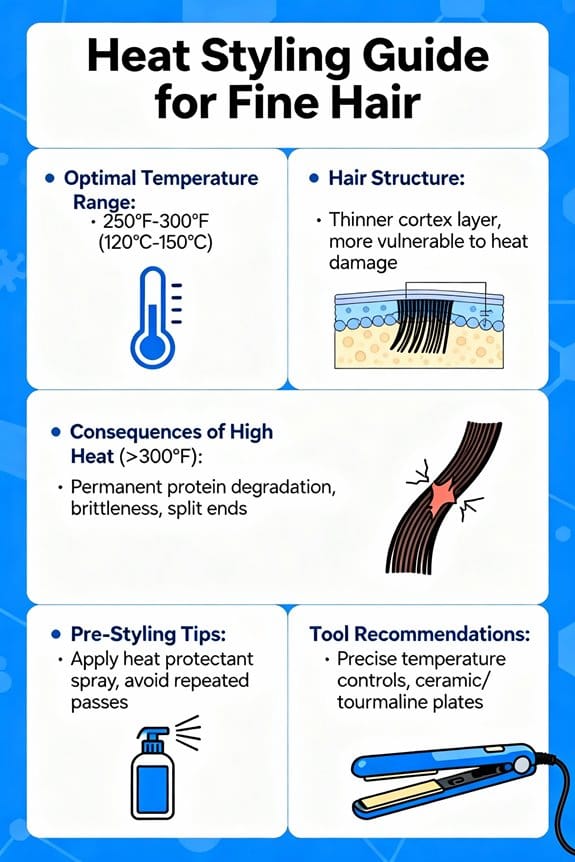
Fine hair demands the ultimate temperature precision, thriving best within a narrow range of 250°F to 300°F, which effectively styles strands without stripping essential moisture or compromising fiber strength, while starting at the lower threshold guarantees controlled heat delivery that minimizes breakage, supports shine retention, and prevents the all-too-common dryness threatening fragile tresses—making it indispensable to select styling tools equipped with accurate temperature controls, rapid heat adjustment, and built-in heat protection technologies to safeguard against split ends and maintain vibrant health after every show-stopping hair session. Staying within this temperature range safeguards fine hair from overheating risks, while the consistent use of quality heat protectant products further reinforces hair health by shielding the cuticle, enabling repeated styling without sacrifice, and keeping every strand luminous and resilient. Additionally, using ergonomic hair cutting shears can help minimize damage caused by physical styling methods, complementing heat protection for overall hair integrity.
Recommended Products

[Salon-Quality Results, Made Effortless] - With over 550K+ units sold to salons, Korea’s #1 Premium flat iron brings flawless, salon-level styling to your home - even if you're a beginner.

1. Infrared Flat Iron with Healthy Heat: Get faster styling with minimal damage with the SUTRA Professional IR2 Infrared 1” Flat Iron. Featuring infrared and ionic technologies, it’s safe for all hair types, making it perfect for creating lasting results that leave hair looking and feeling beautiful, soft, and silky.
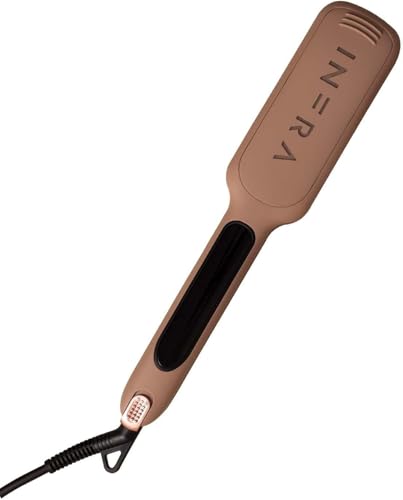
𝗜𝗻𝗳𝗿𝗮𝗿𝗲𝗱 𝗧𝗲𝗰𝗵𝗻𝗼𝗹𝗼𝗴𝘆: Unlock the secret to healthier, more radiant styling with our advanced infrared technology. Say goodbye to damage and hello to effortless beauty. Experience the gentle touch of innovation, designed just for you. It's time to shine!
Recommended Heat Settings for Medium Hair
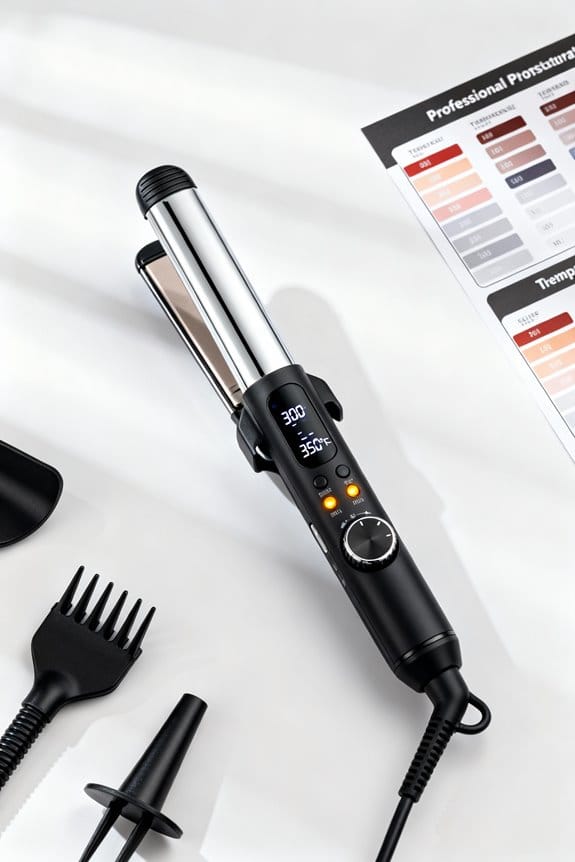
Medium hair offers the supreme styling versatility by tolerating heat settings between 300°F and 350°F, striking a perfect balance between effective shaping and strand preservation, with a suitable starting point at 300°F to deliver controlled warmth that minimizes damage risk while maximizing style retention—particularly when paired with advanced heat protectants that shield cuticles and maintain moisture levels. Ideal temperature selection is essential, as gradually increasing the flat iron temperature within this range ensures the desired look without compromising hair integrity, allowing users to protect your hair from unnecessary heat stress. Staying below 350°F as a maximum heat setting prevents excessive damage, while consistent use of quality heat protectants on clean, towel-dried medium hair further enhances protection, guarantees long-lasting results, and supports show-stopping, healthy styles with ease. The use of ergonomic designs in styling tools also helps reduce strain during prolonged use, improving control and application quality.
Recommended Products
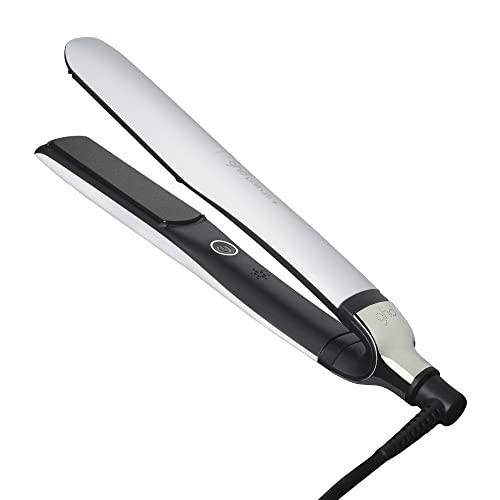
Smart, precise styling: Our patented ultra-zone technology monitors heat, adapting to your hait type and styling speed for consistent, personalized results every time

Sleek, lustrous results: Delivers frizz-free styles with smooth floating ceramic plates and a round barrel for versatile styling

[Salon-Quality Results, Made Effortless] - With over 550K+ units sold to salons, Korea’s #1 Premium flat iron brings flawless, salon-level styling to your home - even if you're a beginner.
Best Temperatures for Thick and Coarse Hair
For hair that boasts robust thickness and coarse texture, the ultimate heat settings span an impressive range from 375°F to 450°F, delivering precisely calibrated thermal power that penetrates dense strands, breaks down stubborn bonds, and sculpts show-stopping styles with fewer passes—beginning at a calculated 370°F for initial control and fine-tuning, this approach maximizes smoothness and durability while minimizing heat exposure time; meanwhile, embracing the upper quota of 410°F to 450°F guarantees enough intensity to tackle the most resilient, multi-textured hair types, maintaining consistent results across varying curl patterns and textures without sacrificing hair integrity. These ideal temperatures release high heat efficiency, allowing thick hair and coarse hair to achieve flawless styling results swiftly, making these styling temperatures the gold standard for powerfully textured hair. Pairing heat styling at these temperatures with nourishing products like volumizing shampoos can help maintain hair health and volume despite heat exposure.
Recommended Products

3x faster styling results: Our patented, smart HD motion-responsive technology adapts to your movements for ultra-fast one-stroke styling on all hair types
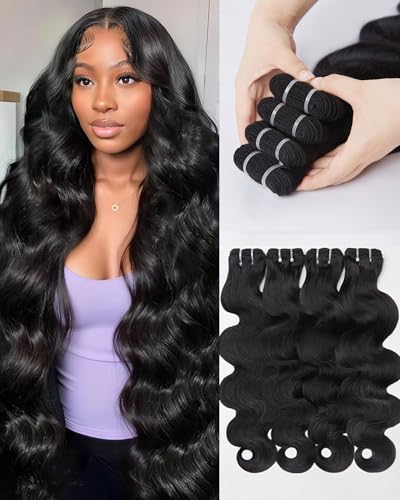
Premium Human Hair Bundles for Authentic Luxury: 100% Unprocessed Indian Raw Bundles Human Hair, Cut from The Young Girl Donor, These Bundles Deliver Unmatched Softness, Shine, and a Natural Look Like Your Own Hair.
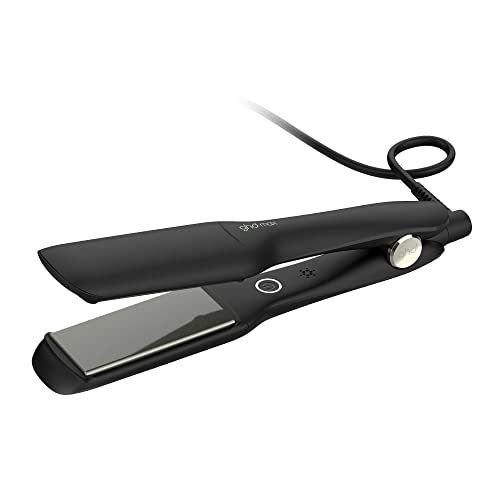
Wider plates for faster styling: 2” ceramic plates are 70% larger* to straighten long, thick, or curly hair in half the time**
Heat Styling Tips for Curly and Wavy Hair
Achieving ultimate styling success for curly and wavy hair confidently begins with selecting precise heat settings—curly hair thrives between 325°F and 375°F, with denser curls occasionally requiring up to 400°F to secure thorough straightening—while wavy hair flourishes at a carefully calibrated 330°F to 350°F range that pairs perfect thermal power with moisture-locking technology, preserving hydration and enhancing natural shine; integrating these calibrated temperatures with advanced heat protectants forms an essential barrier, minimizing damage risks and promoting hair health during styling, all while setting the stage for show-stopping, long-lasting results. Utilizing a flat iron at the ideal temperature with a one pass technique reduces heat exposure, while styling in small sections ensures even heat distribution—critical for flawless finishes and preserving delicate curl patterns without sacrificing shine. Incorporating heat protection oils like those from OUAI or LOreal can further guard hair fibers up to 450°F, enhancing both safety and shine.
Recommended Products

SALON GRADE FORMULA: Get silky straight hair in 1/2 the time. Breathe new life into your hair and stop heat damage. Revitalize shine, prevent frizz, eliminate kink and color-safe protection. Formulated to blend hair extensions to existing hair


This lightweight leave-in conditioner spray penetrates deep to help rebuild dry, damaged hair from the inside. Can be used straight out the shower or before thermal styling. Great for all hair types.
Temperature Guidelines for Chemically Treated Hair
Three essential temperature checkpoints—ranging from 250°F to 300°F—define the ultimate styling window for chemically treated hair, expertly balancing thermal power with gentle care to protect fragile cuticles from overheating and minimize breakage risks, while premium heat protectants formulated specifically for damaged strands form an indispensable shield that locks in moisture, enhances elasticity, and prevents further structural deterioration; this precise temperature calibration, paired with attentive hair monitoring and adaptive styling adjustments, guarantees stunning, show-stopping results without sacrificing hair health or vigor. Prioritizing the lowest temperature setting necessary, users ascertain minimal heat exposure, while consistent monitoring of hair health detects early signs of distress; complementary restoring moisture treatments reinforce resilience, enabling chemically treated hair to maintain optimum strength and shine despite frequent styling demands. Incorporating a lightweight, heat-protectant formula further aids in maintaining moisture while shielding hair from heat damage during styling.
Protecting Hair From Heat Damage
Countless hair enthusiasts rely on premium heat protectants formulated to deliver a robust shield—applied evenly from mid-lengths to ends on clean, towel-dried strands—that reduce heat-induced moisture loss by up to 80%, fortify keratin bonds with patented polymer complexes, and provide thermal resistance at temperatures soaring above 450°F, ensuring every use of hot tools translates into stunning, show-stopping styles without sacrificing hair integrity or elasticity. To keep hair healthy and guard against heat damage, selecting a heat protectant tailored to individual strands—like Kérastase Résistance Ciment Thermique for damaged hair—ensures the lowest possible risk during styling. Limiting hot tool use on damp hair and applying cooler temperatures for finishing locks in shine and liveliness, delivering ultimate protection and vibrant results that maintain hair’s vibrancy day after day. Choosing a styling tool with adjustable heat settings allows for precise temperature control to match your hair type and minimize damage.
How to Adjust Heat for Synthetic Hair
Mastering the art of styling synthetic hair demands meticulous temperature control—maintaining heat levels strictly below 160°F to prevent fiber melting and irreversible texture changes—while employing specialized thermal protectants engineered to form a resilient barrier, reduce heat-induced damage by up to 70%, and preserve the synthetic strands’ vibrant sheen and elasticity, which, combined with the use of heat-setting tools designed explicitly for synthetic materials, delivers the ultimate show-stopping finish without compromising fiber integrity or longevity. Starting styling at the lower temperature threshold near 140°F allows careful assessment of fiber response, minimizing risk of heat damage. Avoiding extended use of conventional hot tools—whose higher temperatures exceed safe limits—is critical, as is consistently applying thermal protectant products formulated specifically for synthetic hair to maintain flexibility, color vibrancy, and overall durability through every styling session. For an organized and damage-free styling routine, consider using adjustable shelves to neatly store heat protectants and styling tools safely.
Signs Your Hair Is Overheated
When synthetic hair encounters excessive heat—even momentarily surpassing the recommended threshold of 160°F—it begins to exhibit telltale signs of overheating, such as an unmistakable dry, straw-like texture that undermines its innate softness and moisture retention capabilities, while increased brittleness and breakage arise from cuticle damage, frequently manifesting as split ends that necessitate targeted repair with advanced protein-infused serums engineered to reinforce weakened bonds by up to 65%, restore elasticity, and deliver the ultimate show-stopping shine without compromising fiber integrity. Additional signs of overheated hair under high temperatures include pronounced frizz and flyaways caused by compromised cuticle layers, dullness from stripped natural oils critical for luster, and unmanageable tangling reflecting severe structural damage, underscoring the importance of vigilant heat control to prevent lasting damage and maintain vibrant hair health. Utilizing hair dryers with advanced ceramic and ionic technologies can significantly reduce frizz and help maintain hair integrity by evenly distributing heat and preventing overheating.
Choosing the Right Hot Tool for Your Hair Type
Although selecting the perfect hot tool might seem straightforward, understanding the precise temperature ranges—ranging from a delicate 250°F for fine strands up to a robust 400°F for coarse or curly textures—and integrating advanced heat control technology guarantees the supreme styling performance without compromising hair integrity, while features like ceramic plates for even heat distribution, adjustable settings calibrated in 10-degree increments, and rapid heat-up times under 30 seconds deliver show-stopping results with minimized damage and maximized shine. Choosing a flat iron tailored to hair type ensures ideal temperature control for safe styling—lower heat (250°F-300°F) for fine hair, moderate levels (300°F-350°F) for medium strands, and high heat (350°F-400°F) for thicker textures—all best paired with a heat protectant to shield hair from thermal stress and preserve lasting smoothness. Additionally, many modern hot tools incorporate advanced heat settings that allow users to customize temperature precisely based on their unique hair needs.
Recommended Products

【1-Year Free Replacement Service】If the product becomes unusable due to a quality-related issue within the 1-year warranty period, we will provide a free replacement with the same or a comparable model. Your experience is just as important to us as the quality of our products
BUY WITH CONFIDENCE — Exceptional Quality Deserves Exceptional Service: At the heart of our brand is a commitment to both product quality and customer satisfaction. That's why every rotary steam roller ironer is backed by our one-year quality assurance program. If your machine becomes inoperable due to a qualifying manufacturing defect during the coverage period, we'll replace it with the same model. Because to us, your ownership experience is just as important as the craftsmanship behind every machine.

STAINLESS STEEL GRIDDLE PLATE: For quality performance, the efficient griddle surface is 3/4" thick, ensuring quick recovery and convenient heat retention.
Frequently Asked Questions
What Temperature Should I Use for My Hair Type?
For curly hair, a moderate temperature close to 325°F supports styling techniques that balance moisture retention and hair health. Employing heat protection products is essential to prevent damage and maintain curl integrity during heat application.
Is 400 Degrees Too Hot for Fine Hair?
400 degrees is too hot for fine hair, increasing the risk of heat damage. Effective styling techniques often involve lower temperatures, combined with protective product recommendations to guarantee ideal hair care and minimize breakage.
What Temperature to Heat Style Hair?
Heat styling techniques vary with hair texture impact, requiring a safe flat iron temperature and heat protectant importance to minimize damage. Proper heat levels guarantee efficient styling and achieving style longevity without compromising hair health.
How Hot Should a Flat Iron Be for 4C Hair?
Flat iron settings for 4C hair should never reach volcanic eruption levels; sticking between 350°F to 400°F guarantees ideal curl definition and moisture retention. Following hair care tips like heat damage prevention safeguards healthy strands beautifully.